
A spangle is a flat, heat-set disc applied directly to the fabric with a press. There is no hole and no thread — the backing melts into the material and holds it there. Because they are applied by machine in a pattern, spangles give an even, deliberate coverage and can fill large areas at a cost that stoning simply cannot match.
They come in glossy and holographic finishes. Glossy reads as a solid colour with a bright highlight; holographic breaks the light into a shifting rainbow and is considerably louder under stage lighting.
The trade-off is heat. A spangle is plastic and it was applied with heat, so an iron will melt it into a smear that cannot be undone.
A sequin is a disc with a hole, attached with thread — either sewn individually or, far more often, supplied as pre-sequinned fabric where the discs are strung in continuous rows.
Sequinned fabric drapes and moves in a way spangles do not, because each disc is free to swing. That movement is the whole point on a lyrical or contemporary piece. The cost is fragility: pull one thread on a sequinned row and a long line of them comes off together.
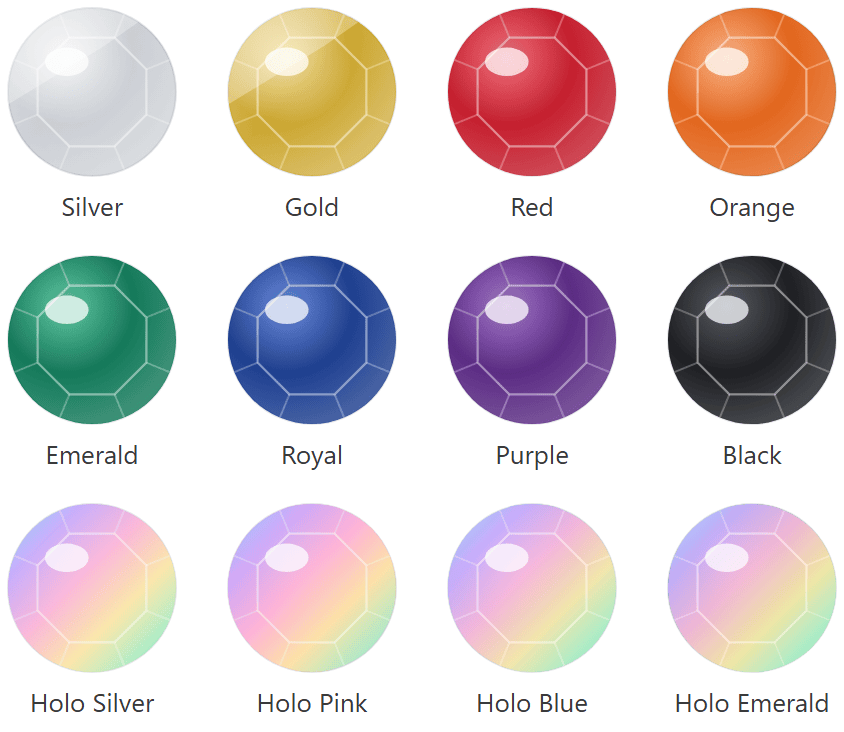
Rhinestones are faceted and cut, so they flash — a hard point of light that changes as the performer moves. Spangles and sequins are flat, so they shimmer over a broad area instead. On a large surface, spangles read better than the same money spent on scattered stones. On a neckline or a seam, stones win.
Plenty of well-made costumes use both: spangles or sequinned fabric for the body, stones for the edges and focal points.
Check for:
Turn the garment inside out, hand wash cold, dry flat. Never iron either one, and never put either in a dryer. Store sequinned pieces away from hook-and-loop fastenings, zips and anything else that will catch a thread. Full routine on the Garment Care page.