
A rhinestone is a cut glass or crystal stone with a foil backing that bounces light back through the facets. The foil is why a stone flashes rather than merely glinting, and it is also why heat and harsh chemicals ruin them — damage the backing and the stone goes flat and grey even though the glass is intact.
Hot-fix stones arrive with a heat-activated adhesive already on the back and are set with a heat tool. Application is fast and even, which makes them the usual choice for dense all-over work.
Glue-on (flat-back) stones are set individually with adhesive. Slower and more expensive in labour, but they can go on fabrics that will not take heat, and a skilled setter can place them more precisely around a seam or a neckline.
You cannot reliably tell them apart by eye on a finished garment, and for a buyer it rarely matters. What matters is that both are glued. Neither survives a tumble dryer.
Not all stones are equal, and the difference is visible under lights.
Hold the piece up to a strong light and look for gaps — small dull spots where a stone has gone. A handful of missing stones on a competed dress is entirely normal and easily repaired. What is worth pausing on:
We describe visible stone loss in our listings. Where a garment’s condition is stated we say so plainly rather than photographing around it.
Cold water, hand wash, dry flat, never dry clean, never near a dryer or an iron. Store flat rather than hung, because a stoned bodice is heavy enough to stretch its own shoulder seams over time. The full routine is on the Garment Care page.
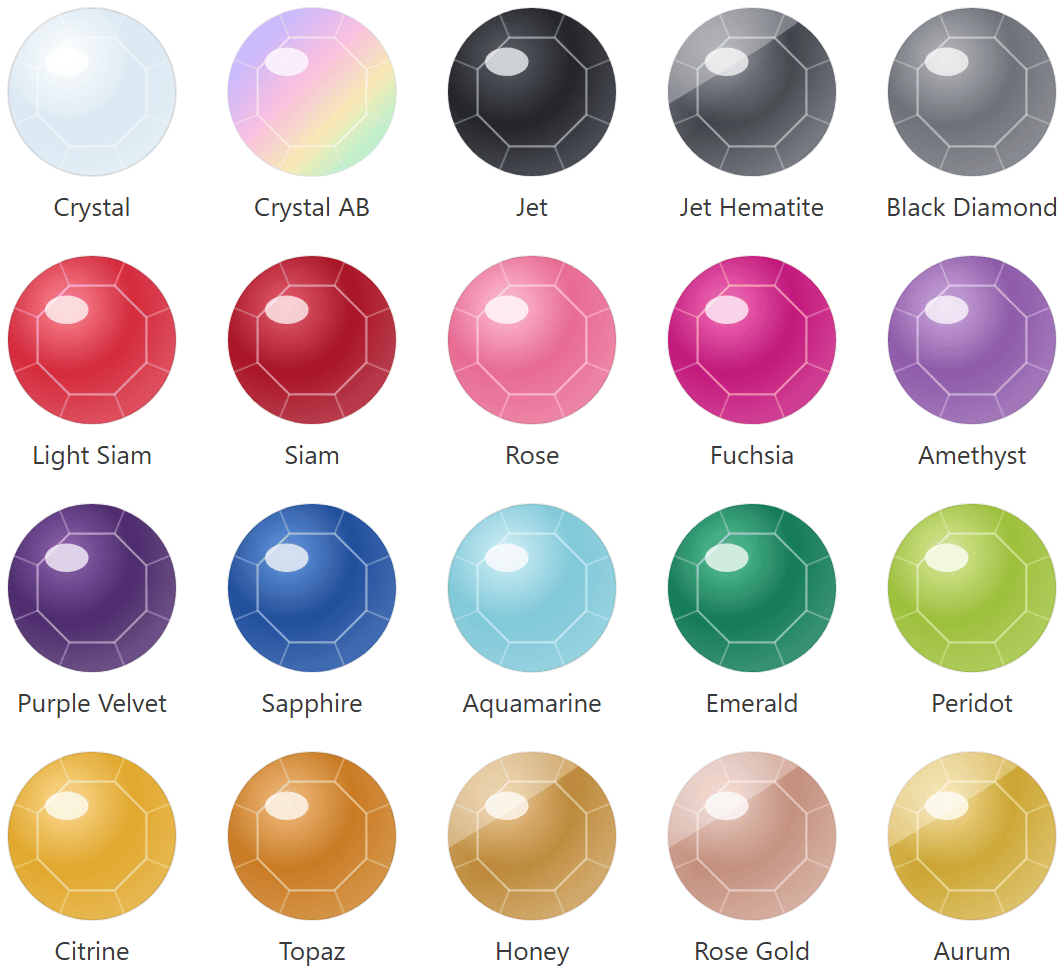
Replacing a lost stone is straightforward if you match the size and colour and use a proper stone adhesive. Sizes are given in ss — ss16 and ss20 are the most common on dancewear, with ss30 and up used for feature stones. General craft glue will hold for a while and then yellow, so it is a false economy.