
Performance garments are cut to hug the body and to stay put through a full routine. As a rule they run one size smaller than the equivalent street clothing, and the difference is deliberate rather than a manufacturing quirk. A dress that feels snug standing still is usually correct once you are moving.
Sizing also varies between makers. A Weissman adult small and a Del Arbour adult small are not interchangeable, which is why we list measurements wherever the garment or its paperwork gives them.
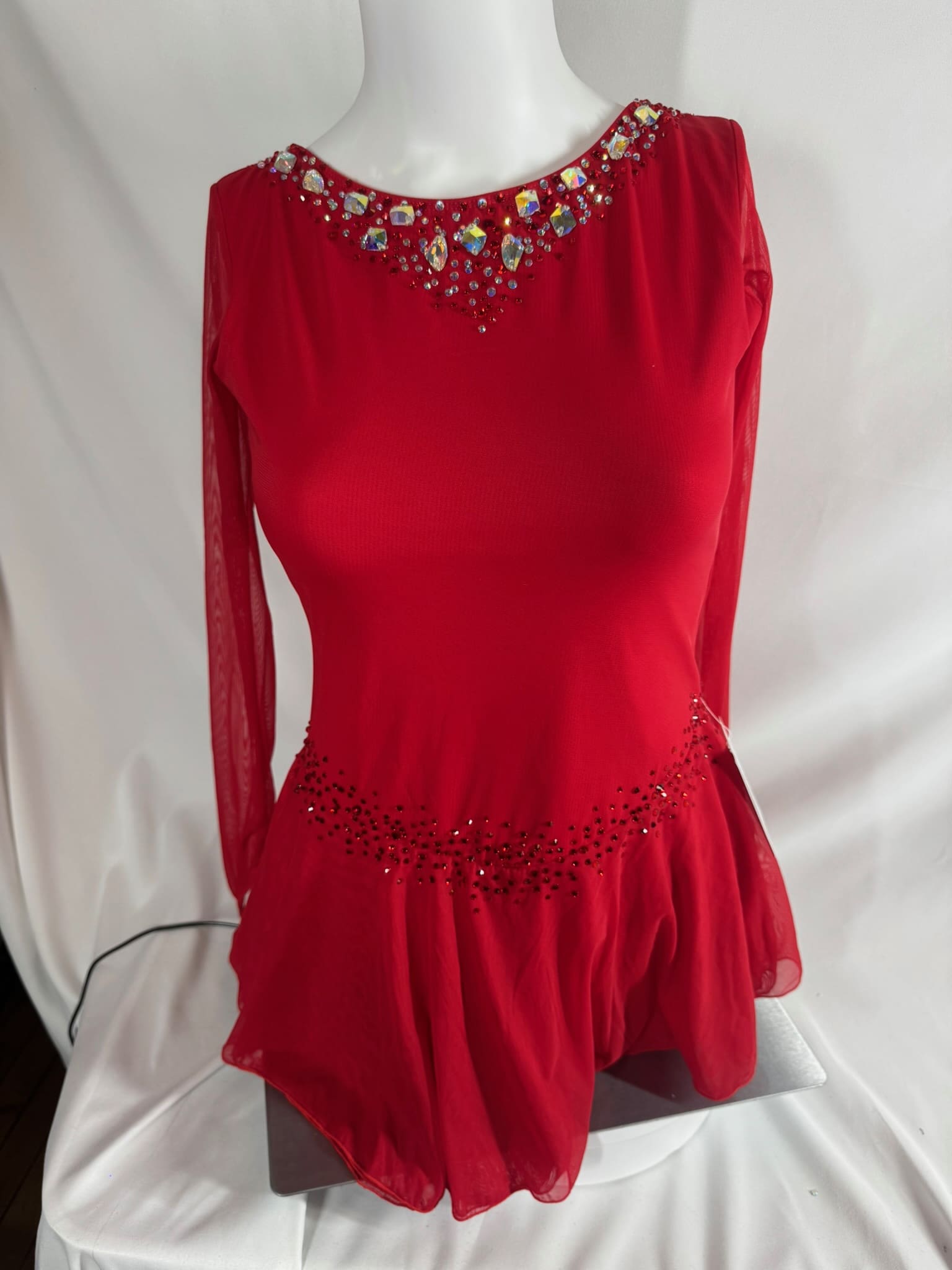
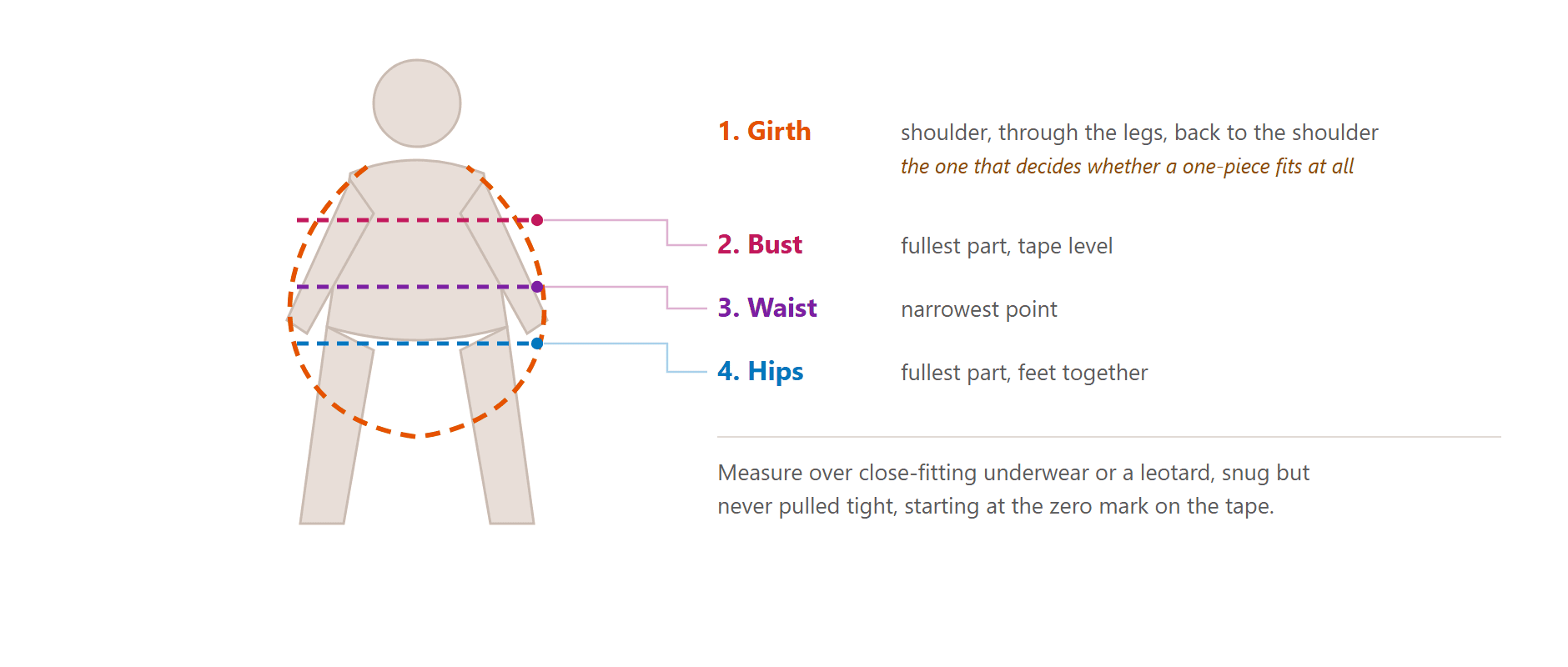
Measure over close-fitting underwear or a leotard, not over clothes. Keep the tape snug but never pull it tight, and start at the zero mark rather than the metal tip. If you can, have someone else measure you — self-measuring the torso is where most errors come from.
These are the measurements behind the size codes you will see on our listings — C for child, A for adult. Heights are a guide to the size a body of that height usually takes, not a requirement.
Chart reproduced from IceDress. Cuts vary between makers, so treat this as a starting point rather than a guarantee — and where a listing gives the garment’s own measurements, those win.
| Size | Height (in) | Bust (in) |
|---|---|---|
| CXXXS | 41 | 21.25–23 |
| CXXS | 43 | 21.25–23 |
| CXS | 45.75 | 21.25–23 |
| CS | 48.25 | 23–24.5 |
| CM | 50.5 | 23–24.5 |
| CL | 52.75 | 24.5–26 |
| CXL | 55.25 | 24.5–26 |
| AXS | 57.5 | 26–27.5 |
| AS | 60 | 27.5–29.25 |
| AM | 62.25 | 29.25–30.75 |
| AL | 64.5 | 30.75–32.3 |
| Size | Height (in) | Waist (in) | Hips (in) |
|---|---|---|---|
| CXXXS | 41 | 19.7–21.25 | 22.85–24.42 |
| CXXS | 43 | 19.7–21.25 | 22.85–24.42 |
| CXS | 45.75 | 19.7–21.25 | 22.85–24.42 |
| CS | 48.25 | 20.5–22 | 25.21–26.79 |
| CM | 50.5 | 20.5–22 | 25.61–27.18 |
| CL | 52.75 | 21.25–22.85 | 27.18–28.76 |
| CXL | 55.25 | 21.25–22.85 | 27.58–29.15 |
| AXS | 57.5 | 21.67–23.25 | 27.58–29.15 |
| AS | 60 | 22.5–24 | 30.73–32.3 |
| AM | 62.25 | 22.85–24.4 | 32.3–33.88 |
| AL | 64.5 | 23.6–25.2 | 33.88–35.46 |
Measuring points for the charts above: bust at the level of the armpits, across the most protruding points of the chest and shoulder blades; waist at the natural waistline; hips at the most protruding point of the buttocks.
Take the larger size when any of these are true:
Taking a costume in is ordinary alteration work. Letting one out depends on there being seam allowance to spare, and on many competition garments there is not.
Do not buy a size up purely for growing room. A costume is fitted for a reason — one bought loose to last two seasons will look loose on stage for the first of them, and a garment that does not hold the body moves badly. Buy for the dancer or skater you have now.
Child bodies are squarer through the torso than adult bodies of the same measurements, so a child who matches an adult extra-small on bust and waist may still need a child cut. Where a garment is listed in child sizes we give the number the maker used; where it is listed as Child Small, Medium or Large, treat that as approximate and go by measurements.
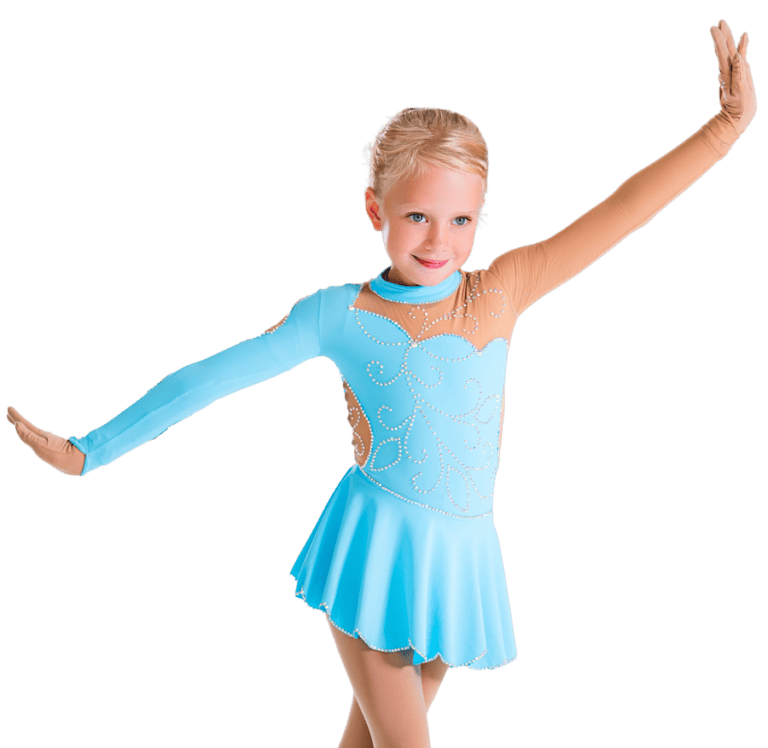
Each product lists its Size and Condition in the details table. Where our records do not establish the size we say Unknown rather than guessing — an invented size on a one-of-a-kind garment is worse than an honest gap. If a listing shows Unknown and you want the measurements, ask us and we will measure the actual garment.
Send us your measurements and the piece you are considering. We have the garment in hand and can tell you what it will actually do on your dancer or skater.